

What are proposal consulting services
To win a contract, a business has to do more than fire off a proposal before the deadline. You have to understand the details of each solicitation, organize your technical information, deal with the evaluation criteria, and submit the whole thing in full compliance with the rules. That is where proposal consulting services fit in.
Plenty of businesses start with a proposal template for consulting services. A template is a useful starting point, but on its own it is rarely enough to win the work. Proposal consulting services help you build proposals that are compliant, persuasive, and well organized.
A proposal template for consulting services gives you a framework, but every proposal still needs to fit the client’s needs. Proposal consultants smooth out the whole process, cut compliance risk, and lift proposal quality.
Any business, whatever its size, can get value from a proposal consultant.
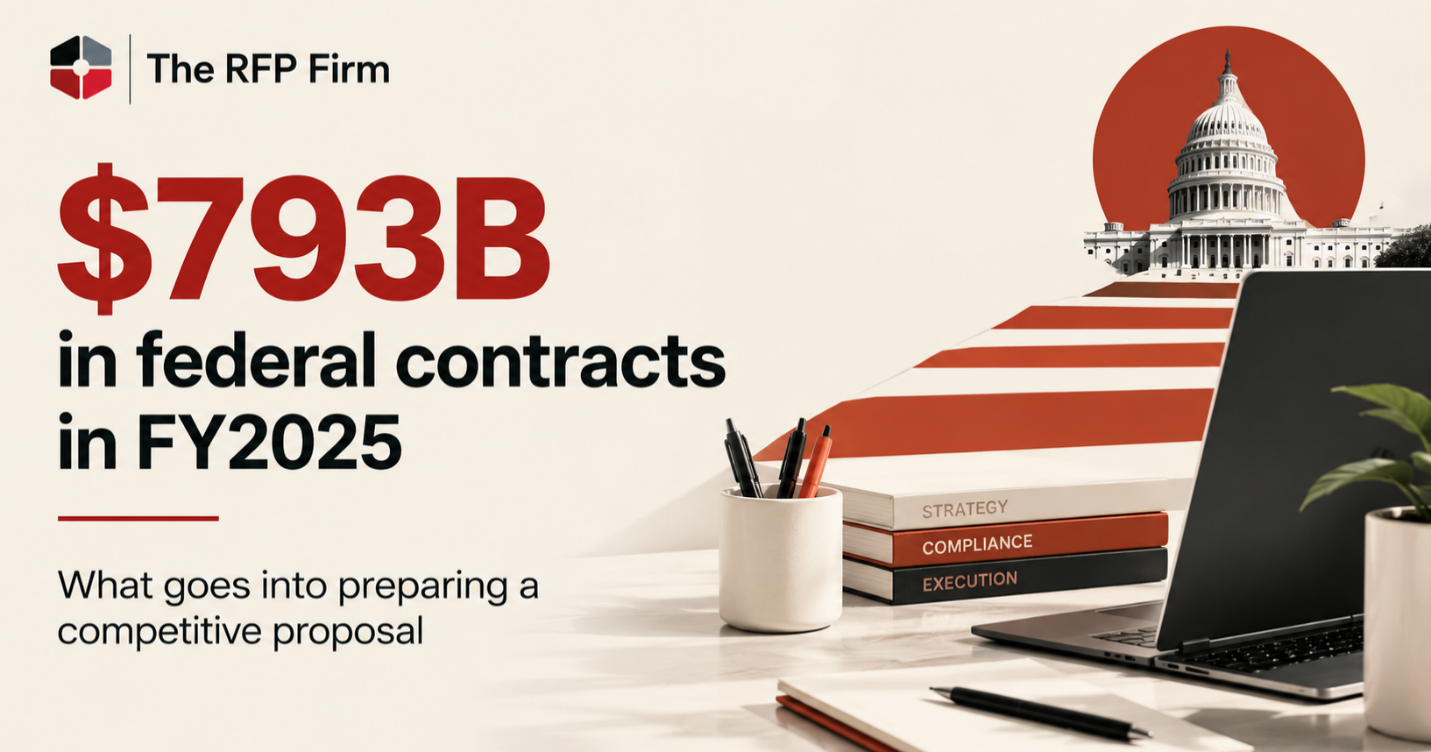
What goes into preparing a competitive proposal?
Competition for government and commercial contracts keeps climbing, and the requirements and evaluation processes just get more tangled. A proposal now has to show technical chops, relevant experience, qualified people, accurate pricing, and full compliance with every last spec. Proposal consultants help you handle all of that with a systematic approach.
In the modern procurement landscape, buyers across both the public and private sectors receive dozens, if not hundreds, of responses for every major solicitation. Evaluating authorities must filter through dense technical language, corporate summaries, and complex pricing sheets to determine which vendor offers the best value and lowest operational risk. In this environment, a proposal cannot simply be an informal document or a high-level pitch deck; it functions as a formal, legally binding, highly structured presentation of your company’s entire operational capability.
Navigating this reality requires specialized skill sets that extend far beyond standard business writing or sales pitching. Proposal consulting services bridge the gap between your organization’s internal technical expertise and the rigorous expectations of professional evaluators. By implementing industry-proven proposal management methodologies, these specialized consultants guide organizations through every phase of the procurement lifecycle, from initial solicitation analysis to final submission and post-award debriefs.
When a company relies solely on internal resources to draft major bids, subject matter experts are pulled away from their primary operational duties, leading to burnout and fragmented narratives. Proposal consultants step in to provide structure, discipline, and strategic focus, ensuring that every section of the submission directly answers the buyer’s explicit and implicit needs. This strategic alignment turns a basic bid into a compelling, high-scoring proposal that differentiates your business from competing vendors.
Furthermore, procurement guidelines differ significantly depending on whether you are pursuing a federal, state, local, or commercial opportunity. Federal procurements, for example, are governed by strict Federal Acquisition Regulation (FAR) guidelines, requiring intricate compliance structures and specific response formats. Commercial entities, on the other hand, may prioritize rapid return on investment and risk mitigation. Proposal consultants bring multi-industry expertise to the table, ensuring your organization presents a tailored, fully compliant, and persuasive narrative regardless of the procurement vehicle.
Ultimately, engaging proposal consulting services is an investment in your business development infrastructure. Rather than treating each bid as an isolated, high-stress emergency, working with experienced consultants helps establish a repeatable, scalable bidding methodology. This systemic approach not only elevates the quality of individual submissions but also maximizes your team’s efficiency, positioning your business for sustained long-term revenue growth.
Is a proposal template enough?
A proposal template for consulting services is a good place to start, since it gives every proposal a consistent format. However, what a template cannot do is actively interpret complex solicitation requirements, tailor specific responses to a unique opportunity, or develop persuasive technical narratives out of raw data. A static framework is similarly unable to track complex compliance matrices, coordinate multiple internal contributors across departments, or execute a thorough multi-tiered proposal review. Every proposal still has to be carefully shaped around the client’s explicit goals, the evaluation criteria, and the overall scope of work.
While static templates provide a visual baseline, they are fundamentally passive instruments. A template cannot evaluate the underlying intent behind an RFP’s complex specifications, nor can it identify subtle evaluation biases hidden within an agency’s scoring guidelines. Relying exclusively on pre-formatted text often results in generic responses that signal to evaluators that your firm did not take the time to understand their unique organizational challenges.
To truly resonate with an evaluation committee, a proposal must present a customized narrative that directly maps your strengths to the client’s explicit requirements. A template provides section headers, but it cannot synthesize complex technical workflows, articulate unique win themes, or emphasize your competitive differentiators. Without specialized strategic input, template-based proposals risk sounding identical to those submitted by competitors who relied on similar standardized frameworks.
Furthermore, tracking rigorous compliance metrics requires active human management that static documents simply cannot offer. Solicitations frequently hide critical submission guidelines deep within complex appendices, standard terms, or addenda. A template cannot verify whether your team has attached the required certifications, met specific font and margin parameters, or properly structured the pricing schedules. Missed details in any of these areas can result in immediate administrative disqualification before your technical response is even read.
Managing a winning proposal effort also demands multi-disciplinary collaboration across your executive, technical, financial, and legal teams. Templates cannot facilitate communication, reconcile conflicting input from multiple contributors, or establish strict editorial standards. Without an active coordinator overseeing the process, multi-author documents often suffer from disjointed writing styles, contradictory statements, and missed internal review deadlines.
Finally, effective quality assurance requires rigorous, objective evaluation methodologies that templates cannot execute. A successful bid undergoes multiple stages of critical review, evaluating compliance, strategic narrative, and technical accuracy. Proposal consultants bring structured review processes, such as color-team reviews, to critically score the draft against official evaluation criteria prior to final submission. This active, human-led review process ensures that errors are corrected, gaps are closed, and the final document represents your firm’s absolute best offer.
What does a proposal consulting service offer?
Proposal consulting goes way beyond basic writing and light editing. Typical services encompass comprehensive RFP analysis, compliance matrix development, proposal strategy workshops, technical writing, executive summary development, management approach writing, past performance documentation, editing and proofreading, compliance reviews, and final submission support. If you want professional support, take a look at the proposal consulting services from The RFP Firm.
The modern proposal consulting landscape encompasses a broad spectrum of specialized services designed to support businesses at every stage of the procurement cycle. Rather than acting merely as outsourced proofreaders, professional proposal consultants function as strategic advisors, project managers, and technical writers combined. They bring structured methodologies to help your business translate complex technical capabilities into clear, compliant, and highly persuasive proposal content.
At the onset of any bid, consultants conduct an exhaustive analysis of the RFP, unraveling complex language to extract mandatory requirements, evaluation criteria, and submission constraints. This step forms the foundation of the entire effort, ensuring that no requirement is overlooked. Following this initial breakdown, consultants construct a detailed compliance matrix, a vital tool that maps every single client requirement directly to specific sections, pages, and paragraphs within your proposal response.
Strategic planning is another critical service provided by proposal consultants. During the initial strategy phases, consultants lead win-theme workshops to identify your core competitive advantages, risk mitigation strategies, and value propositions. They help articulate why your firm is uniquely qualified to execute the contract, weaving these central themes throughout every section of the document to ensure a cohesive and compelling argument that appeals directly to scoring evaluators.
On the development side, consultants provide rigorous technical and management writing support. They interview your subject matter experts to extract technical details and translate dense operational jargon into crisp, accessible prose. Whether drafting the executive summary, detailing project management methodologies, or showcasing past performance records, consultants ensure the content is tailored, highly responsive, and structured logically for maximum scoring potential.
Finally, proposal consulting services encompass complete quality assurance and post-writing support. This includes multi-stage editorial reviews to unify voice, eliminate grammatical errors, and ensure stylistic consistency across all volumes. Consultants oversee strict compliance checks, verify document formatting, manage final assembly, and assist with digital or physical submission protocols. For organizations seeking comprehensive, expert-led bid management, turning to trusted industry leaders like The RFP Firm ensures every bid meets the highest standards of quality and rigor.
How can proposal consulting services strengthen your proposal?
Consultants improve two things at once: the overall quality of the proposal and how efficiently you produce it.
Enhancing proposal performance requires a dual focus on content mastery and operational efficiency. When businesses attempt to manage bids entirely in-house without dedicated proposal professionals, the quality of the submission often suffers alongside operational productivity. Proposal consultants resolve this tension by bringing structured frameworks that simultaneously elevate narrative quality and streamline internal workflows.
From a quality perspective, consultants transform static corporate descriptions into dynamic, client-focused narratives. They ensure that every sentence serves a purpose, either directly addressing a required specification, establishing technical competence, or reinforcing a core win theme. By aligning the narrative structure precisely with the client’s evaluation criteria, consultants make it effortless for evaluators to locate key information and award maximum points.
Simultaneously, consultants introduce institutional efficiency into what is often a chaotic, stress-inducing process. By establishing clear timelines, managing section assignments, and coordinating input from diverse internal teams, consultants eliminate duplicated effort and prevent last-minute rushes. This systematic management allows subject matter experts to contribute their knowledge efficiently without sacrificing their day-to-day operational responsibilities.
Ultimately, the combination of superior content structure and streamlined production creates a powerful competitive advantage. Proposals produced under the guidance of experienced consultants are not only more persuasive and fully compliant, but they are also created with less internal friction and lower operational disruption. This elevated standard of execution significantly boosts your firm’s credibility and long-term win rates.
How do consultants improve proposal quality?
Consultants write answers that actually respond to the solicitation instead of just restating your company info. Their work usually covers organizing proposal sections logically, strengthening executive summaries, aligning responses with the evaluation criteria, improving readability, cutting repetitive content, and keeping messaging consistent throughout the document. The result is a proposal that is far easier for evaluators to read and score favorably.
Improving proposal quality begins with structuring content so evaluators can easily find the information required to give your firm top scores. Evaluators often score dozens of bids against rigid rubrics under tight deadlines; if your response is disorganized or difficult to navigate, even the most impressive qualifications can be overlooked. Consultants organize proposal sections logically, using clear headings, subheadings, and cross-references that mirror the exact structure of the solicitation guidelines.
A critical area where consultants dramatically lift proposal quality is the executive summary. Too often, internal teams treat the executive summary as a generic company history or a high-level overview of their service catalog. Proposal consultants transform this section into a high-impact sales document that clearly outlines the client’s core challenges, presents your proposed solution, highlights key differentiators, and summarizes the tangible value and benefits your team will deliver.
Aligning narrative content directly with evaluation criteria is another hallmark of consultant-led proposal development. Consultants ensure that every response explicitly addresses the specific criteria upon which the award decision will be made. Rather than relying on generic statements of capability, they guide your team in providing concrete evidence, metrics, and case studies that demonstrate past success and validate your technical claims.
In addition to structural alignment, consultants refine the prose itself to maximize clarity and readability. They eliminate wordy fluff, remove internal jargon, cut repetitive narrative blocks, and maintain a consistent, authoritative tone across all sections. By polishing the language and enforcing visual hierarchy, consultants deliver a crisp, highly professional document that respects the evaluator’s time and leaves a lasting positive impression.
How does proposal consulting save time?
A strong proposal pulls from leadership, technical staff, finance, and project management. A proposal consultant wrangles all that input so your internal teams can stay focused on core business operations, client delivery, technical work, pricing strategies, and long-term planning. That coordination takes a huge chunk out of the administrative load during a bid.
Developing a competitive proposal requires input from across your organization, demanding time and energy from executives, technical lead engineers, financial analysts, and project managers. Without dedicated proposal management, internal experts are forced to juggle bid preparation alongside their core operational duties. This often leads to missed internal milestones, rushed writing, elevated employee stress, and compromised quality in both the proposal and ongoing business operations.
Proposal consultants act as centralized project managers who take ownership of the entire proposal lifecycle. They establish detailed compliance matrices, set realistic production schedules, and assign clear content ownership across your team. By managing daily coordination, setting up review gates, and sending proactive reminders, consultants keep the development process on track without requiring constant executive intervention.
Furthermore, consultants streamline the content gathering process by conducting structured interviews with your subject matter experts. Rather than asking busy engineers or project managers to draft lengthier narratives from scratch, consultants extract technical knowledge verbally, synthesize the information, and draft the content themselves. Subject matter experts then only need to review and refine the technical accuracy of the narrative, saving dozens of hours of high-value internal time.
By absorbing the administrative, editorial, and management burdens of proposal development, consultants allow your internal team to maintain focus on revenue-generating activities and core business delivery. Executives can focus on high-level strategy and pricing models, technical teams can concentrate on solution design and active client projects, and sales personnel can continue driving new pipeline opportunities, ensuring your business operates smoothly throughout the entire bidding cycle.
Why is compliance one of the biggest benefits?
Lots of proposals lose points for one avoidable reason: they missed an instruction. Proposal consultants meticulously check required forms, certifications, attachments, page limits, formatting instructions, submission deadlines, required signatures, and file-naming conventions. A structured compliance review catches problems before you submit, not after.
In competitive procurement, compliance is binary: a proposal is either fully compliant, or it is subject to immediate rejection. Evaluation committees enforce strict administrative guidelines to maintain fairness and manage high submission volumes. Even minor oversights—such as exceeding page counts, utilizing non-compliant font sizes, omitting a required representation form, or failing to sign a mandatory addendum. (can lead to disqualification regardless of how superior your technical solution may be)
Proposal consultants bring an uncompromising, systematic focus to compliance management from day one. They dissect every solicitation clause to build an exhaustive compliance matrix, cataloging every explicit directive alongside implicit instructions hidden in general clauses. This matrix serves as the master tracking tool throughout the writing, editing, and review stages, ensuring every requirement is assigned, addressed, verified, and cross-referenced.
During final document preparation, consultants conduct thorough, multi-layered compliance audits. They verify that all administrative forms are complete, accurate, and properly executed with valid signatures. They rigorously check physical and digital formatting constraints, including page margins, line spacing, graphic labels, table column structures, and specific file-naming conventions required by digital procurement portals.
Catching and correcting these procedural errors prior to submission is essential to protecting your investment in the opportunity. By enforcing rigorous quality control protocols, proposal consultants eliminate administrative compliance risks, ensuring that your submission safely passes initial screening gates and reaches the evaluation panel for full scoring and consideration.
When should your business use a proposal template for consulting services?
Templates are handy when you use them right. A proposal template for consulting services works best as the foundation for a customized proposal, not a document you copy from one opportunity to the next.
While custom proposal development is essential for complex, high-stakes opportunities, standardized proposal templates play a valuable role in a company’s overall business development toolkit. When utilized correctly, a well-designed template provides a consistent organizational framework, establishes visual branding standards, and speeds up response times for lower-risk, routine solicitations.
However, the primary danger of using templates lies in over-reliance. Many businesses fall into the habit of treating templates as finished, “plug-and-play” documents, simply swapping out client names and submitting generic responses across multiple opportunities. This approach almost always leads to weak, unpersuasive bids that fail to address the specific nuances and evaluation criteria of individual clients.
To maximize the value of a proposal template for consulting services, organizations must treat it strictly as a structural starting point. The template should provide standard layout guidelines, pre-formatted typography, boilerplate corporate overviews, and structured section headings. From there, every single narrative section must be systematically tailored, updated, and expanded to reflect the target client’s specific scope of work, technical requirements, and strategic priorities.
Using templates effectively also requires ongoing maintenance and continuous updates. A proposal library should never remain static; it must be regularly refreshed with recent past performance records, updated team biographies, current client testimonials, and refined methodology write-ups. When combined with a disciplined customization process, standard templates allow your team to produce polished, brand-aligned bids efficiently without sacrificing narrative relevance.
What should a good proposal template include?
A professional proposal template usually includes key structural sections such as a cover letter, executive summary, company profile, understanding of requirements, technical approach, project management methodology, staffing plan, past performance records, pricing section, and required appendices. Once this skeleton is in place, you customize each section to the specific solicitation.
A comprehensive proposal template must provide a structured skeleton that guides authors through all the essential elements of a persuasive business bid, such as the following:
- Cover letter
- Executive summary
- Company profile
- Understanding of requirements
- Technical approach
- Project management methodology
- Staffing plan
- Past performance
- Pricing section
- Required appendices
The core structure of the template should proceed through critical introductory sections, with a detailed company profile. The executive summary frames your value proposition around the client’s core objectives, while the company profile outlines your corporate history, mission, core capabilities, and operational stability. Together, these sections establish initial credibility and contextualize your technical narrative.
Next, the template must accommodate detailed technical and operational frameworks. This includes dedicated sections for demonstrating your understanding of the client’s explicit requirements, detailing your proposed technical approach, outlining project management and quality assurance methodologies, and presenting a robust staffing plan complete with key personnel resumes and organizational charts.
Finally, a complete proposal template provides dedicated spaces for proving track record and detailing financial investment. The past performance section structures project summaries, client references, and measurable outcomes to build evaluator trust. This is followed by transparent pricing schedules, cost breakdowns, and required appendices including legal certifications, financial statements, and compliance documentation, ensuring a fully articulated response ready for customization.
When is proposal consulting necessary?
A few specific situations make proposal consulting especially worth the investment: answering a government agency’s RFP for the first time, going after high-value contracts, managing several proposal deadlines at once, lacking proposal expertise in-house, preparing highly technical proposals, or wanting an independent proposal review. A template gives you the baseline format; a consultant adds strategy, deep customization, and an objective quality check.
Determining when to engage external proposal consulting services depends on evaluating your internal capacity, the strategic value of the opportunity, and the operational complexity of the solicitation. While internal teams may handle routine inquiries or small-scale bids independently, certain high-stakes scenarios demand the specialized expertise, structured processes, and objective oversight that professional consultants provide.
One of the most critical triggers for external support is entering new procurement arenas, such as submitting a bid to a government agency for the first time. Public sector procurement processes involve intricate compliance requirements, specialized FAR regulations, and strict submission protocols that differ dramatically from commercial sales. Professional consultants help navigate these unfamiliar legal and administrative landscapes, protecting your firm from costly missteps.
High-value, strategic contracts (often referred to as “must-win” opportunities) likewise justify dedicated proposal consulting support. When a contract represents a transformative revenue opportunity, relying on informal internal processes carries unacceptable risk. Consultants bring high-level strategy, persuasive writing expertise, and rigorous quality assurance reviews that significantly elevate your proposal’s competitive standing against established market incumbents.
Additionally, proposal consultants provide critical operational relief during periods of resource strain or organizational transition. Whether your team is overwhelmed by multiple overlapping bid deadlines, lacking dedicated proposal development personnel, facing highly technical response requirements, or simply seeking an objective review of a draft document prior to submission, bringing in expert consultants ensures your business can pursue growth opportunities aggressively without sacrificing quality.
How do you choose the right proposal consultant?
Choosing a proposal consultant takes more than checking for basic writing chops. Look for providers who bring deep experience in your industry, government contracting know-how, structured proposal management expertise, compliance review capabilities, technical writing experience, collaborative communication habits, transparent project management methodologies, and long-term proposal support capabilities.
Selecting the ideal proposal consulting partner is a strategic decision that directly impacts your market growth and bid success rates. Because proposal development is an intensive, highly collaborative process, choosing a firm requires evaluating capabilities that go well beyond basic writing and editing skills. You need a partner who combines deep industry insight, proven project management capabilities, and a commitment to understanding your business culture.
Industry experience and specialized domain knowledge should be top priorities during your evaluation. A consultant who understands the technical nuances, terminology, and operational standards of your specific sector can synthesize information from your subject matter experts far more effectively. Furthermore, if you are pursuing public sector opportunities, verifying the consultant’s track record in government procurement and regulatory compliance is absolute imperative.
Equally important is assessing the consultant’s proposal management methodology and technical writing caliber. The right consulting firm should demonstrate a structured approach to managing timelines, conducting win-theme workshops, building compliance matrices, and running multi-stage quality reviews. They must possess the technical writing ability to articulate complex operational strategies in clear, persuasive, evaluator-friendly language.
Finally, evaluate the consultant’s communication style, project management transparency, and cultural fit. Effective proposal support relies on open, real-time collaboration with your executive and technical leadership. Look for consultants who establish clear milestones, communicate proactively, provide transparent fee structures, and show a genuine interest in building a long-term strategic partnership that strengthens your internal proposal capacity over time.
Questions to ask before hiring a proposal consultant
Before you commit to hiring a proposal consultant, it is essential to ask targeted questions to ensure a seamless operational fit. You should ask which specific sectors they specialize in and whether they have supported proposals similar to yours in size and scope. It is also important to inquire if they provide comprehensive RFP analysis and formal compliance reviews alongside standard writing support. Ask how they actively manage tight proposal schedules, what exact quality-assurance processes they enforce, and what specific background information and time commitments they will need from your internal team. Asking these questions helps confirm that you are partnering with the right proposal team to make your development process run smoothly.
Conducting thorough due diligence before selecting a proposal consultant requires asking targeted, probing questions about their experience, methodologies, and operational protocols. Start by exploring their industry-specific expertise and asking for concrete examples of similar bids they have successfully managed. Inquiring about their track record with target agencies or commercial entities helps confirm whether their experience aligns directly with your current opportunity.
Next, delve into their technical and compliance management workflows. Ask specifically how they conduct initial RFP analyses, build compliance matrices, and execute quality assurance checks. Understanding how they establish and manage production schedules, resolve content gaps, and coordinate input from multiple internal contributors ensures their project management approach fits your organization’s operational cadence.
It is also crucial to clarify operational expectations, resource commitments, and communication frameworks upfront. Ask what specific data, background documents, subject matter expert access, and internal reviews they will require from your team throughout the process. Establishing clear expectations around roles, responsiveness, and turnaround times prevents misunderstandings and ensures a seamless, highly collaborative proposal development effort.
Which best practices help businesses create better proposals?
Whether you use your own staff or bring in an external consultant, it pays to follow a standardized process for every single bid. A practical, step-by-step approach involves thoroughly analyzing the solicitation before writing, developing a comprehensive compliance matrix, reviewing the official evaluation criteria, and gathering all supporting administrative documents early in the timeline. From there, assign clear writing and management responsibilities across your team, ensure every narrative section is deeply customized, run rigorous technical and editorial reviews, and perform a final compliance check immediately prior to submission. Adopting this consistent workflow regularly lifts proposal quality while cutting down on last-minute edits and costly mistakes.
Adopting standardized, repeatable best practices across your business development lifecycle is essential for driving consistent win rates and minimizing proposal stress. Regardless of whether an opportunity is managed entirely by internal staff or supported by external consultants, implementing a structured proposal development framework ensures that every submission meets high standards of quality, compliance, and persuasiveness.
The proposal process must always begin with rigorous analysis and planning prior to drafting any narrative content. Thoroughly dissecting the solicitation, creating a detailed compliance matrix, and mapping evaluation criteria allows your team to build a clear blueprint for the proposal. Gathering administrative documentation, past performance summaries, key personnel resumes, and financial records early in the process prevents chaotic rushes near the submission deadline.
Clear accountability and deep customization are equally critical best practices. Assigning specific content ownership for every section ensures no requirement is neglected, while conducting win-theme planning prevents the inclusion of generic, untailored narrative content. Every proposal must be explicitly tailored to address the client’s unique operational environment, risks, and strategic goals.
Finally, establishing rigorous quality assurance review gates is vital for catching errors before submission. Implementing structured editorial and technical review cycles where independent reviewers evaluate the draft strictly against compliance and scoring guidelines allows your team to refine messaging, fix compliance gaps, and polish formatting. A final administrative compliance check conducted immediately prior to submission guarantees that all forms, attachments, and formatting standards are fully met.
At a glance, here’s what proposal consulting brings to each stage of the process:
| Proposal consulting activity | Business benefit |
|---|---|
| RFP analysis | Identifies mandatory requirements early |
| Proposal planning | Creates a structured development process |
| Technical writing | Improves proposal clarity and responsiveness |
| Compliance review | Reduces submission risks |
| Editing and proofreading | Improves consistency and professionalism |
| Final quality review | Helps ensure submission readiness |
For more proposal resources, best practices, and professional support, visit The RFP Firm.
Strengthen every proposal with professional consulting support
A proposal template for consulting services is a great way to get going, but competitive bidding takes a lot more than filling in a few standard sections. A strong proposal is well planned, tailored, compliant, and lined up with the client’s evaluation criteria.
Professional proposal consulting supports every stage: RFP analysis, writing, compliance, editing, and proofreading. Government contract or a commercial opportunity, an experienced proposal consultant sharpens your submission and saves you serious time. If you want to raise your proposal quality, pairing a solid template with professional proposal consulting services is the way to do it.
Building a sustainable, high-performing business development apparatus requires combining the efficiency of structured internal templates with the strategic depth and rigor of professional proposal consulting. While templates offer standard formatting and repeatable structures, expert consultants provide the strategic insight, compliance tracking, and persuasive writing needed to stand out in intense bidding environments.
Investing in expert proposal support transforms bidding from an administrative chore into a high-yield growth strategy. By streamlining workflows, reducing operational disruption for subject matter experts, and eliminating compliance risks, proposal consultants empower your business to pursue larger, more complex, and higher-value contracts with confidence.
Ultimately, winning competitive contracts comes down to clarity, compliance, and proof of capability. Partnering with seasoned proposal professionals ensures that your submissions articulate your unique value proposition clearly, comply fully with every client specification, and position your firm as the clear partner of choice for every bid you pursue.
Frequently asked questions
What are proposal consulting services?
Proposal consulting services help businesses put together competitive proposals: RFP analysis, proposal development, technical writing, compliance checks, editing, and submission support.
What is a proposal template for consulting services?
It’s a sample document that shows how to structure a consulting proposal. Always customize it to the client’s requirements.
Why should businesses hire proposal consultants?
For the specialized expertise: strategy, compliance, writing, editing, and proposal management all in one place.
Can proposal consulting services improve win rates?
No consultant can guarantee an award. But professional, compliant, well-structured proposals make you more competitive when it’s time to score.
When should you use a template instead of hiring a consultant?
Templates work fine for routine or straightforward proposals. The complex or high-value ones get a lot more out of professional proposal consulting.
How do you choose a proposal consulting firm?
Look at industry experience, proposal management, government contracting expertise, technical writing skills, and compliance review.
Recent Posts
- What are proposal consulting services
- Contract for services template Canada: A complete guide for businesses and freelancers
- Top benefits of using a proposal writing service for business growth
- Common proposal mistakes a proposal consultant can help you avoid
- Why businesses are hiring professional proposal writing companies in 2026