


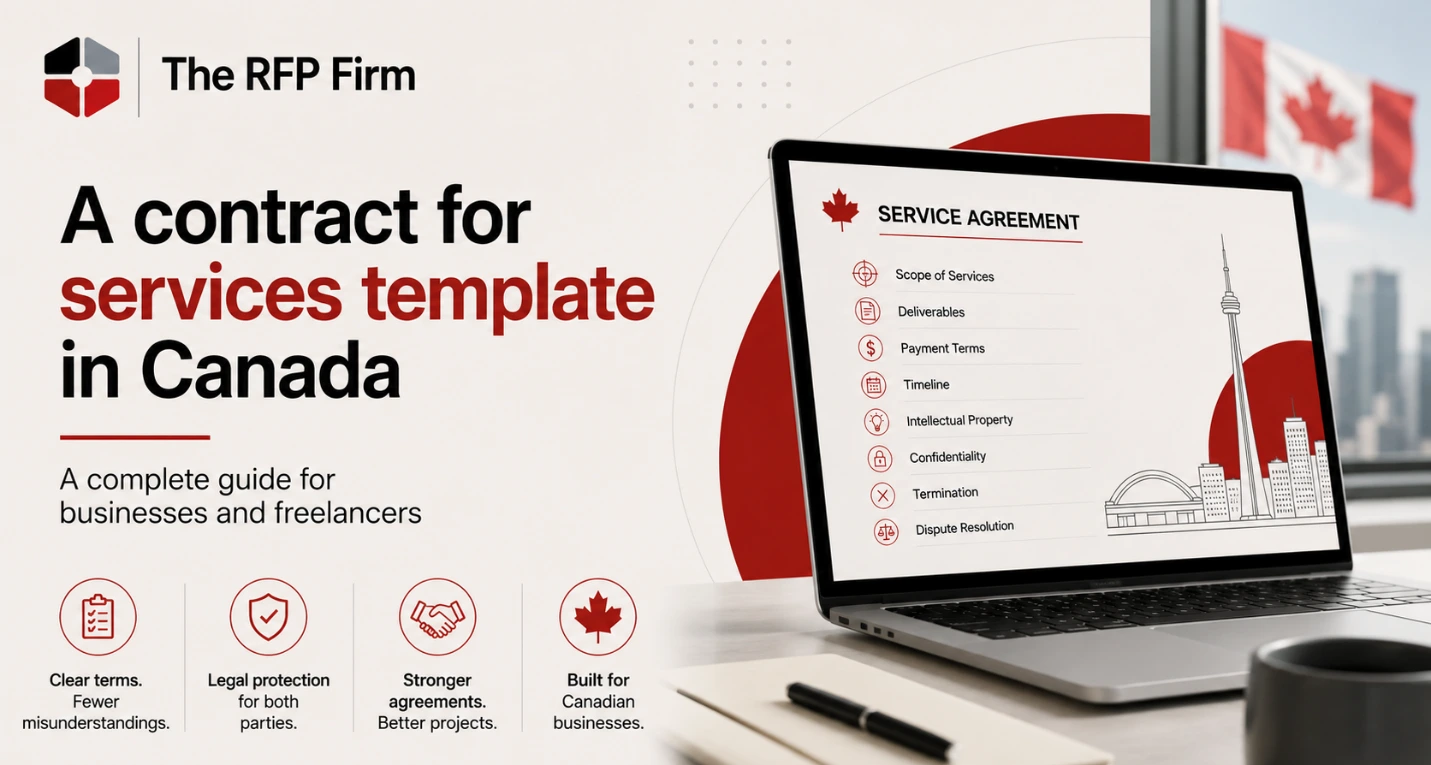
Contract for services template Canada: A complete guide for businesses and freelancers
If you’re a consultant, freelancer, or any kind of professional service provider, a solid service agreement is one of the most important things you can have in place. In Canada, a service agreement sets out the roles, responsibilities, and expectations before anyone starts working. It gives both sides a clear understanding of what they’re agreeing to and provides something they can refer back to if questions come up later.
For businesses and independent professionals, a contract for services template Canada can provide a clear, repeatable structure for putting service agreements in writing. Templates are useful starting points because they outline the terms you need to consider, but they should not be treated as one-size-fits-all documents. Every project is different, so the agreement should reflect the specific services, client, timeline, and terms involved.
A well-written service agreement sets clear expectations before the work starts and can reduce the chances of disagreements over payment, scope, or simple misunderstandings. Businesses, consultants, freelancers, and independent contractors can all benefit from putting the working relationship into writing.
A solid contract also works well alongside a strong proposal. The proposal can explain what you’re offering and how you’ll approach the work, while the contract establishes the terms that govern the relationship once the project moves forward.
What is a contract for services?
A contract for services is an agreement between a service provider and a client that lays out the services, cost, timeline, and other key terms of the work. It gives both parties a shared understanding of what is expected and provides a written record of the agreement.
Unlike an employment agreement, a contract for services is used when an independent contractor, rather than an employee, does the work. At its core, the agreement should make sure both sides are clear about the services being delivered, what will be handed over at the end of the project, how and when payment will be made, the project schedule, ownership of the work, and the conditions under which the agreement can end.
The more clearly these points are addressed at the beginning, the less room there is for confusion once the project is underway.
Who needs a service contract?
You do not need to draft every agreement from scratch. A contract for services template Canada can give you a starting point, but it still needs to be adapted to the actual project, payment terms, timeline, and responsibilities. It can be adapted for outsourced providers, independent contractors, agencies, and specialist professionals who need a written agreement with clear defined terms and conditions.
Service contracts are also common among independent contractors, marketing agencies, IT service providers, and professionals such as designers, writers, engineers, and other specialists.
Whatever the industry, putting expectations in writing protects both the client and the service provider. It gives each side a clear reference point for the work and helps establish what was agreed to before the project began.
Why every business and freelancer needs a service agreement
A project can seem straightforward at the beginning, when the details are discussed over email or on a call. But once the work starts, small gaps can quickly become problems. The contract should make it clear what is included, when payment is due, who owns the finished work, and what happens if the scope changes or the relationship needs to end.
A service contract turns that lose understanding into something clear and enforceable. It gives both parties a written record of their responsibilities and helps establish what should happen if something doesn’t go according to plan.
Legal protection
A written contract lays out what each party owes the other and gives both sides something to point to if a dispute comes up. Rather than relying on someone’s recollection of a conversation or a series of emails, the agreement provides a central reference for the accepted terms.
Clear expectations
A good service agreement defines the scope, responsibilities, timelines, and deliverables before the work begins. That clarity can prevent misunderstandings later, particularly when a project involves several stages or multiple people on the client and service-provider sides.
When both parties understand what is included and what isn’t, it’s much easier to manage the project as it progresses.
Payment security
Payment terms are another area where clarity matters. A good contract should explain how much the client will pay, when payments are due, how invoices should be submitted, and what happens if a payment is late.
Depending on the project, the agreement may also cover the accepted payment methods and any deposit requirements. Having these details in writing means both sides know where they stand financially from day one.
Reduced disputes
Many disputes come back to expectations that were never written down in the first place. One person assumes something is included, while the other considers it outside the original scope. A client expects a certain deadline, while the service provider understands the timeline differently.
A detailed service contract takes some of that guesswork out of the relationship. By establishing the terms before work begins, both sides have a clearer understanding of what they’ve agreed to.
What should a contract for services template in Canada include?
Every project is different, but a professional contract for services template should cover the core terms that define the working relationship in Canada. The exact language and provisions will depend on the project and the parties involved, but the agreement should leave no doubt about who is responsible for what.
Parties involved
Start by identifying the parties to the agreement. This means listing the legal names, business names, if applicable, and contact details for both the client and the service provider.
Getting this information right from the beginning helps establish exactly who is entering into the agreement.
Scope of services
The scope of services should describe the work in enough detail so that both sides understand what’s included and what’s outside the agreement.
A vague scope can create problems later, especially when a client assumes additional work is part of the original project. The more clearly the services are defined, the easier it is to manage expectations.
Project timeline
The agreement should establish when the project starts and how the work will progress. Depending on the project, this may include key milestones, the final completion date, and any client review periods.
Having these dates documented gives both sides a clear reference point throughout the project.
Payment terms
Payment terms should explain how the service provider will be compensated. This may include the project fee or hourly rate, payment schedule, deposit requirements, invoice timing, and any applicable late-payment terms.
The goal is to make the financial side of the agreement as clear as the scope of work.
Deliverables
The contract should explain what the client will actually receive at the end of the work. Depending on the project, which could mean reports, designs, software, written content, consulting materials, or other completed work.
Clearly defining deliverables helps prevent confusion about what constitutes completion.
Confidentiality clause
If the client shares sensitive business information, the contract should address confidentiality. This can help establish how information shared during the project is expected to be overseen and protected.
Intellectual property rights
Intellectual property is another area that should be addressed before work begins. The agreement should clarify who owns the finished work, source materials, and any other intellectual property once the applicable payment has been made.
This is particularly important for projects involving creative work, software, designs, written materials, or other original assets.
Termination clause
A termination clause sets out how either side can end the contract. Depending on the agreement, this may include notice periods, the circumstances that allow termination, and any amounts that remain owed when the relationship ends.
Dispute resolution
A service agreement can also explain how disputes will be managed if they arise. Establishing a process for addressing disagreements can give both parties a clearer path forward before the matter escalates to legal action.
Governing law
The agreement should identify the Canadian province or territory whose laws govern the contract. This is particularly important when the client and service provider are located in different jurisdictions.
| Contract section | Why it matters |
|---|---|
| Parties involved | Identifies the client and service provider |
| Scope of services | Defines exactly what work will be performed |
| Timeline | Establishes project milestones and deadlines |
| Payment terms | Explains fees and payment schedule |
| Deliverables | Describes expected project outcomes |
| Confidentiality | Protects sensitive information |
| Intellectual property | Clarifies ownership of completed work |
| Termination clause | Explains how either party may end the agreement |
| Dispute resolution | Defines how disagreements will be handled |
| Governing law | Specifies the applicable provincial or territorial law |
What are the benefits of using a professional contract template?
A well-built template gives businesses a consistent starting point and helps prevent important terms from being overlooked. Instead of creating a new agreement from scratch every time, you can work from an established structure and adjust it to fit the project.
That can make document preparation faster and reduce administrative effort, while also keeping terms organized and easier to manage. A professional-looking agreement can also create a stronger impression with clients and make communication around the project clearer.
The main benefits include a consistent contract structure, clearly organized terms, faster document preparation, less administrative effort, a more professional impression, better communication with clients, and easier contract management.
The important part is to use the template as a starting point rather than treating it as a finished agreement. The terms should still be tailored to the specific project instead of being used straight out of the box.
How can a proposal writing service support better client agreements?
Multiple businesses put together a detailed proposal before the contract gets signed. The proposal lays out the solution, cost, and approach, while the contract establishes the legal framework within which the work happens.
When those two documents work together, the transition from an accepted proposal to an active project becomes much smoother. The scope described in the proposal should line up with the services and deliverables outlined in the agreement, and the commitments made during the proposal process should be reflected accurately in the final contract.
A professional proposal writing service can help create that consistency by making sure proposal commitments are clearly defined, project scope is organized, and deliverables and milestones are easy to understand. It can also help keep the proposal and related documents consistent, reducing the chance of misunderstandings before the work begins.
If you want to strengthen both your proposals and your client paperwork, it’s worth exploring professional proposal support from The RFP Firm.
What should you avoid?
Most service-contract trouble comes down to information that’s missing, outdated, or too vague. A service description that doesn’t clearly define the work can create scope disagreements. An undefined payment schedule can lead to confusion about when invoices should be paid. Similarly, leaving out termination provisions can make it harder for either side to understand what happens when the relationship needs to end.
Intellectual property ownership is another area that shouldn’t be left unclear, particularly when the project involves creative work, software, designs, or other original materials. Confidentiality obligations, project deadlines, and other responsibilities should also be addressed where they’re relevant.
It’s also important not to assume that an old template will automatically work for a new project. Using outdated terms or relying on the same agreement for every client can create problems when the circumstances are different.
Before signing, read the agreement carefully and make sure the terms reflect the actual project. Taking the time to address unclear areas upfront can help head off disputes later.
How can you customize your contract for different projects?
Different projects have unique needs, so the contract should reflect the actual work being performed. A consultant working on a six-month engagement may need quite different terms from a designer completing a one-time project or an IT provider delivering ongoing services.
Depending on the project, you may need to adjust the scope of services, deliverables, payment schedule, timeframe, client responsibilities, communication process, approval process, and ownership of project materials.
The goal isn’t to create a completely new agreement every time. A structured template can give you a reliable foundation, while the individual terms can be adjusted to match the job in front of you.
That approach saves time while still giving each client relationship the attention it needs.
Build stronger business relationships with clear service contracts
Whether you’re hiring a consultant, collaborating with a freelancer, or offering professional services yourself, putting the relationship in writing creates a stronger foundation for the project.
A clear service contract gives both parties a better understanding of their responsibilities, payment terms, deliverables, and expectations. When it’s paired with a professionally written proposal, the two documents can work together to make the handoff from a new client to an active project much more seamless.
Clear agreements aren’t about protecting yourself when something goes wrong. They’re also about making sure everyone starts the project with the same understanding of what success looks like.
Frequently asked questions
Is a service contract legally binding in Canada?
Yes. A properly prepared service contract can be legally binding in Canada as long as it meets the applicable legal requirements. For anything important, it’s smart to get legal advice while you’re drafting it.
Can freelancers use the same template?
Yes. Freelancers, consultants, and independent contractors use service contract templates all the time. They should tailor each agreement to the actual services, price, and terms of the job rather than using the exact same document for every client.
Should contracts include taxes?
Yes. The contract should say whether applicable taxes, like GST/HST and PST, are included in the quoted price or added on top.
Being clear about taxes upfront can prevent confusion when invoices are issued and helps both sides understand the total cost of the services.
What’s the difference between a proposal and a contract?
A contract for services template in Canada serves to turn the agreed scope, pricing, deliverables, timelines, and responsibilities into a service agreement that can guide the working relationship once the client and service provider decide to move forward. The proposal may explain what will be offered, but the service contract sets out the terms both sides are expected to follow.
In an RFP process, a proposal is the document a bidder submits in response to the requirements set by the buyer. It explains how the bidder will meet the stated scope of work, technical requirements, pricing instructions, schedule, and evaluation criteria.
Recent Posts
- What is proposal consulting and how can it help your business?
- Government request for proposal: A complete guide for businesses
- What is a request for proposal: Everything you need to know
- Format of business proposal: A complete guide for beginners
- The best proposal template Canada businesses can use in 2026